Research

In-depth reports on the policy issues facing open networks.

The Wash-Sale Rule Would Break Crypto Tax Compliance

The wash-sale rule was designed for a narrow context: securities held as long-term investments, typically within a single account, where taxpayers can deliberately time tax losses without changing their economic position. Digital assets operate in a fundamentally different environment. They are used for transactions as…

Software is Speech: Why Regulators Cannot Invent the Missing Middlemen

Financial regulation has traditionally applied where a person takes another’s affairs in hand—exercising custody, control, or delegated judgment. Modern software, however, allows individuals to transact directly, without intermediaries. Some regulators and lower courts have responded by advancing a “functional” theory of code, treating software as…

Six Ways Congress Can Make Crypto Taxes Work for Everyday Users

At Coin Center, our mission is to defend the rights of individuals to build and use free and open cryptocurrency networks. Sound tax policy is central to that mission. Without updates, the tax code can impose administrative burdens so severe that everyday participation in these…

Tear Down this Walled Garden: American Values and Digital Identity

Financial institutions today are burdened by identity verification frameworks that are simultaneously costly, privacy-invasive, and ineffective at deterring illicit finance. Despite vast surveillance systems built on the foundation of the Bank Secrecy Act (BSA), global authorities estimate that less than 1% of criminal proceeds are…

Principles for Crypto Legislation

A general introduction to “crypto,” both the underlying technology as well as the larger ecosystem, and a set of principles for legislating in this area to ensure that American rights are protected and American innovation is able to flourish.

Broad, Ambiguous, or Delegated: Constitutional Infirmities of the Bank Secrecy Act

The Bank Secrecy Act (BSA) allows the Secretary of the Treasury to demand transaction surveillance and reports of personal information from a category of entities defined as “financial institutions.” Originally that category primarily consisted of insured banks, but over the years it has significantly expanded.…

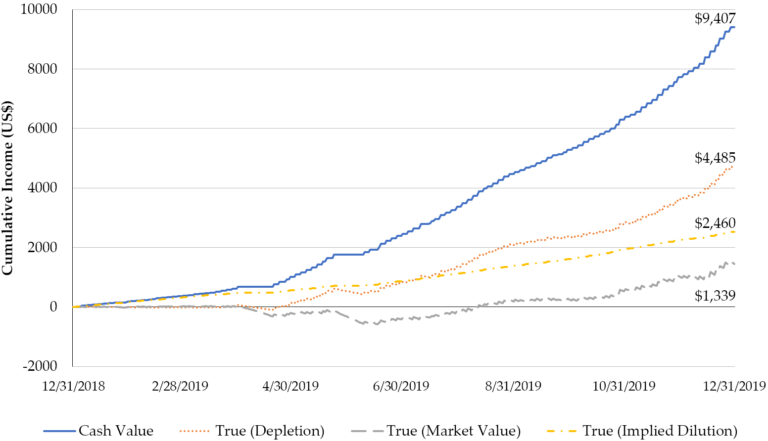
Dilution and its discontents: Quantifying the overtaxation of block rewards

Newly created cryptocurrency tokens dilute the holdings of existing token owners. If block rewards are taxable income at their fair market value at the time acquired, token holders’ income will be overstated. This report explains dilution and, using the example of a real-life token holder…

Estimating Bitcoin Electricity Use: A Beginner’s Guide

The rapid emergence of Bitcoin and other cryptocurrencies has taken many in the energy sector by surprise. This report summarizes complexities and pitfalls in analyzing the electricity demand of new information technology, focusing on Bitcoin, the mostly widely used cryptocurrency. It also gives best practices…

A Duty to Answer: Six Basic Questions and Recommendations for the IRS on Crypto Taxes

U.S. taxpayers lack answers to basic questions about the federal tax and reporting effects of transactions involving cryptocurrencies. Although the Internal Revenue Service has been examining issues related to the taxation of “virtual property” and “virtual currencies” for over a decade, it has only issued…

Electronic Cash, Decentralized Exchange, and the Constitution

Regulators, law enforcement, and the general public have come to expect that cryptocurrency transactions will leave a public record on a blockchain, and that most cryptocurrency exchanges will take place using centralized businesses that are regulated and surveilled through the Bank Secrecy Act. The emergence…

The Case for Electronic Cash

Cash is more than a method of payment. It is a fundamental tool for individual privacy and autonomy, and it is necessary for an open society. This paper shows that a cashless economy is a surveillance economy. It also argues that removing the option to…

Framework for Securities Regulation of Cryptocurrencies

This report, originally published in 2016 and updated in 2018, presents a framework for securities regulation of cryptocurrencies— e.g. Bitcoin and derivative projects or “alt-coins.” The framework is based on the Howey test for an investment contract as well as the underlying policy goals of…

The Need for a Federal Alternative to State Money Transmission Licensing

The several states rather than the federal government are the primary regulators of money transmitters. State-by-state money transmission licensing is inefficient because transmitters provide a networked good that inherently crosses state lines, and because state regulators cannot and do not account for these externalities when…

The Bank Secrecy Act, Cryptocurrencies, and New Tokens: What is Known and What Remains Ambiguous

This report summarizes how various activities performed with cryptocurrencies and similar tokens have thus far been characterized by FinCEN and other authorities for the purposes of determining the compliance obligations of persons performing those activities under the Bank Secrecy Act. This report will also describe…

State Digital Currency Principles and Framework

States have begun to look at how virtual currencies, such as Bitcoin, and the businesses that utilize them to provide consumer products, interact with money transmission and consumer protection policy. This report reviews the approaches taken by the several States thus far, and offers model…

Open Matters: Why Permissionless Blockchains are Essential to the Future of the Internet

This report offers a non-technical but thorough explanation of “blockchain technology” with a focus on the key variables within consensus mechanism design that differentiate so-called permissioned or closed and permissionless or open blockchains. We describe decentralized computing generally and draw parallels between open blockchain networks,…

A Securities Law Framework for Blockchain Tokens

This framework was originally published December 2016. It is well out of date now. Do not rely on it. As the development of blockchain tokens (also known as App Coins) continues to enable new decentralized business models, new legal issues come into focus. For developers,…

Bitcoin: A Primer for Policymakers

This plain language guide describes how the digital currency works and addresses many of the common misconceptions about it.

Overcoming Obstacles to Banking Virtual Currency Businesses

Virtual currency businesses (“VCBs”) offer an alternative payment rail to traditional banks and financial institutions. In order to operate, though, VCBs themselves rely on banks to conduct fundamental payment, savings, foreign exchange and other financial functions. Banks, as heavily regulated entities, apply certain levels of…

Bitcoin: Risk Factors for Insurance

The February 2014 bankruptcy of Mt. Gox, the original and for three years running largest Bitcoin exchange1, may have been precipitated by a grand digital heist. Mt. Gox announced a “high possibility” that $600 million in bitcoins had been stolen because of a security vulnerability,…

Bitcoin: Our Best Tool for Privacy and Identity on the Internet

Financial privacy is an umbrella term for both data security and privacy. We can think of security as the ability to hide information from all comers and privacy, following Nissenbaum’s concept of contextual integrity, as the ability to shape how we selectively reveal information and…

Bitcoin Financial Regulation: Securities, Derivatives, Prediction Markets, and Gambling

We predict and analyze the the next major wave of Bitcoin regulation. 

The New Palgrave Dictionary of Economics: cryptocurrency

This article explains what cryptocurrency is and begins to answer the new questions that it raises.